
Seedance vs Veo vs Kling vs Wan: AI Video Model Comparison for Camera Movement
An AI video model comparison becomes much more useful when it focuses on one specific problem instead of trying to decide which model is universally best.
For camera movement, Seedance, Veo, Kling, and Wan can be compared through different priorities: reference handling, prompt-driven camera direction, coordination between subject and camera motion, and stability during controlled movement.
This makes Seedance vs Veo vs Kling vs Wan less about creating a fixed ranking and more about understanding which model is more relevant to compare for a particular type of camera movement.
Seedance vs Veo vs Kling vs Wan for Camera Movement
The main differences become clearer when each model is connected to the camera-movement problem it is most useful to evaluate.
Model | Main Comparison Focus | Relevant Camera Movement Scenario | Key Difference |
|---|---|---|---|
Seedance | Reference handling, motion consistency, subject stability | Reference-led character movement | Useful for comparing how well visual identity is preserved while motion is introduced |
Veo | Prompt adherence, camera direction, scene continuity | Prompt-driven cinematic shots | Useful for comparing how clearly written camera instructions are interpreted |
Kling | Coordination between subject movement and camera movement | Character tracking shots | Useful when both the character and camera are moving at the same time |
Wan | Stability during simpler camera changes | Push-in, pull-back, controlled reference-based scenes | Useful for comparing straightforward, controlled camera movement |
This table is not a performance ranking. It shows the main camera-movement area that makes each model relevant to the comparison.For a broader overview of the model families available on the platform, see the Seedance.com.ai multi-model AI video guide.
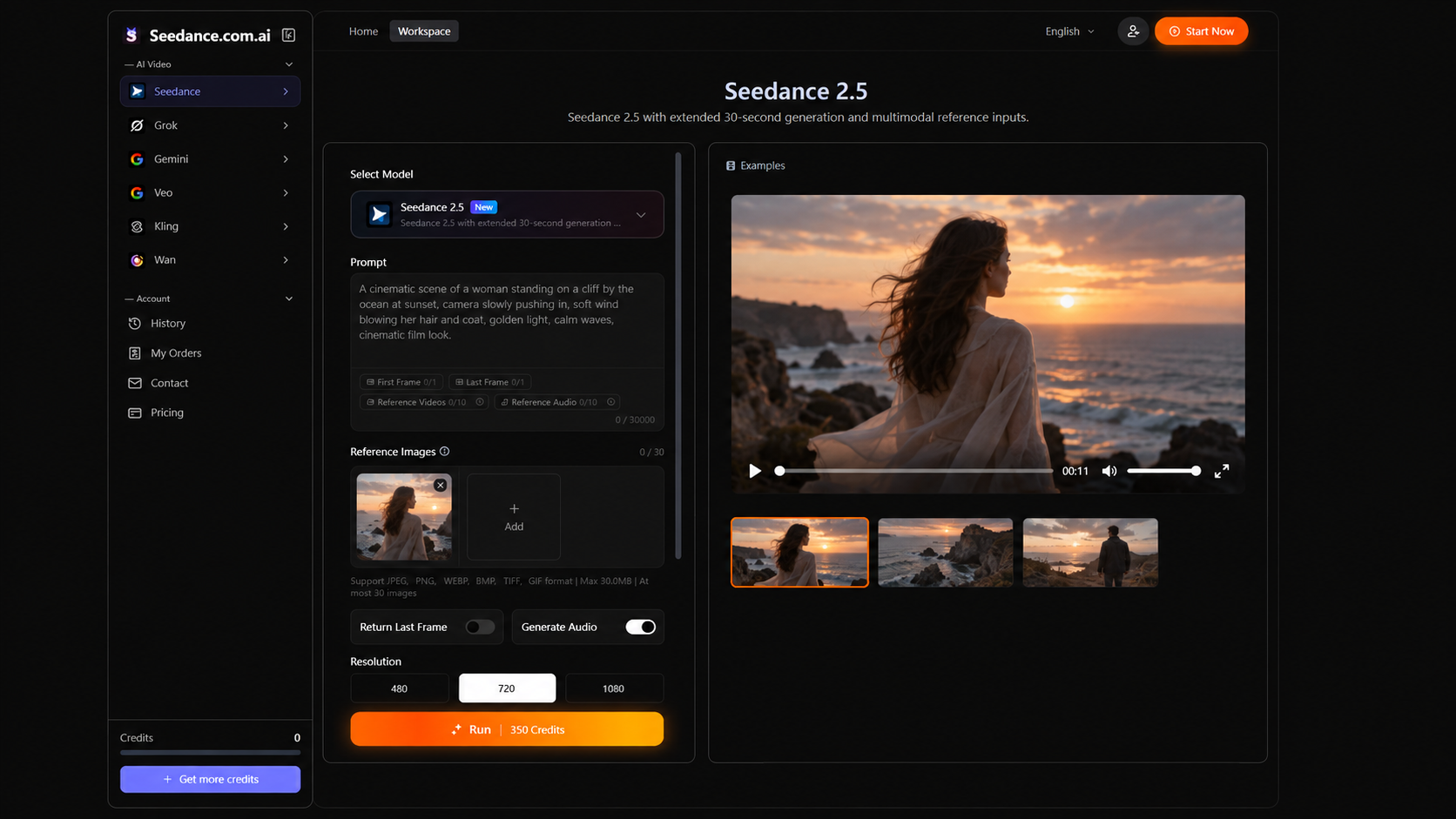
Seedance: Reference Handling and Subject Stability
Seedance is most relevant in this comparison when camera movement begins from a visual reference.
Once movement is introduced, the challenge is not only making the subject or camera move. Important visual details from the reference also need to remain recognizable throughout the generated sequence.
This makes reference handling, motion consistency, and subject stability the main points to consider when comparing Seedance with other AI video models.
For character-focused scenes, this is especially important because camera movement can reveal changes in clothing, body proportions, facial structure, or overall framing that may be less obvious in a static image.
In a Seedance vs Veo comparison, this is one of the clearest differences in emphasis: Seedance is more closely connected to reference-led motion, while Veo is more closely connected to camera direction described through prompts.
Veo: Prompt-Driven Camera Direction
Veo is more relevant when camera movement is defined primarily through written instructions.If you want to describe camera direction more clearly in text prompts, see our AI video prompt guide.
A prompt may describe a slow push-in toward a subject, a camera following a person from behind, or a pull-back that gradually reveals more of the environment.
In this type of scene, the main comparison points are prompt adherence, camera direction, and scene continuity.
The question is not simply whether the video contains motion. It is whether the generated movement corresponds to the camera direction described in the prompt.
For prompt-driven cinematic scenes, Veo therefore represents a different comparison focus from reference-led workflows.
Kling: Character Motion and Camera Coordination
Kling is especially relevant when subject movement and camera movement happen together.
A tracking shot is a clear example. If a character walks through a scene while the camera follows, the model must coordinate character motion, camera speed, framing, and the changing background at the same time.
This makes Kling particularly useful to compare in scenes where the relationship between the moving subject and the moving camera matters more than a simple change in framing.
In a Seedance vs Kling comparison, the distinction is therefore different from Seedance vs Veo. Seedance places more emphasis on reference handling and subject preservation, while Kling is more relevant when active subject movement needs to remain coordinated with the camera.
This is also why Kling is closely connected to the question of the best AI video model for tracking shots, even though the final choice still depends on the specific scene and input.
Wan: Controlled Camera Movement
Wan is more relevant when the camera movement is relatively simple and controlled.
Push-in and pull-back shots are useful examples because the direction is clear and the model does not need to handle the same level of subject-camera interaction as an active character tracking shot.
For these scenes, stability during the camera change becomes the main point of comparison.
Camera speed, subject structure, and background geometry need to remain coherent as the framing changes.
This makes Wan particularly relevant when comparing an AI video model for push-in and pull-back shots or other controlled camera changes.
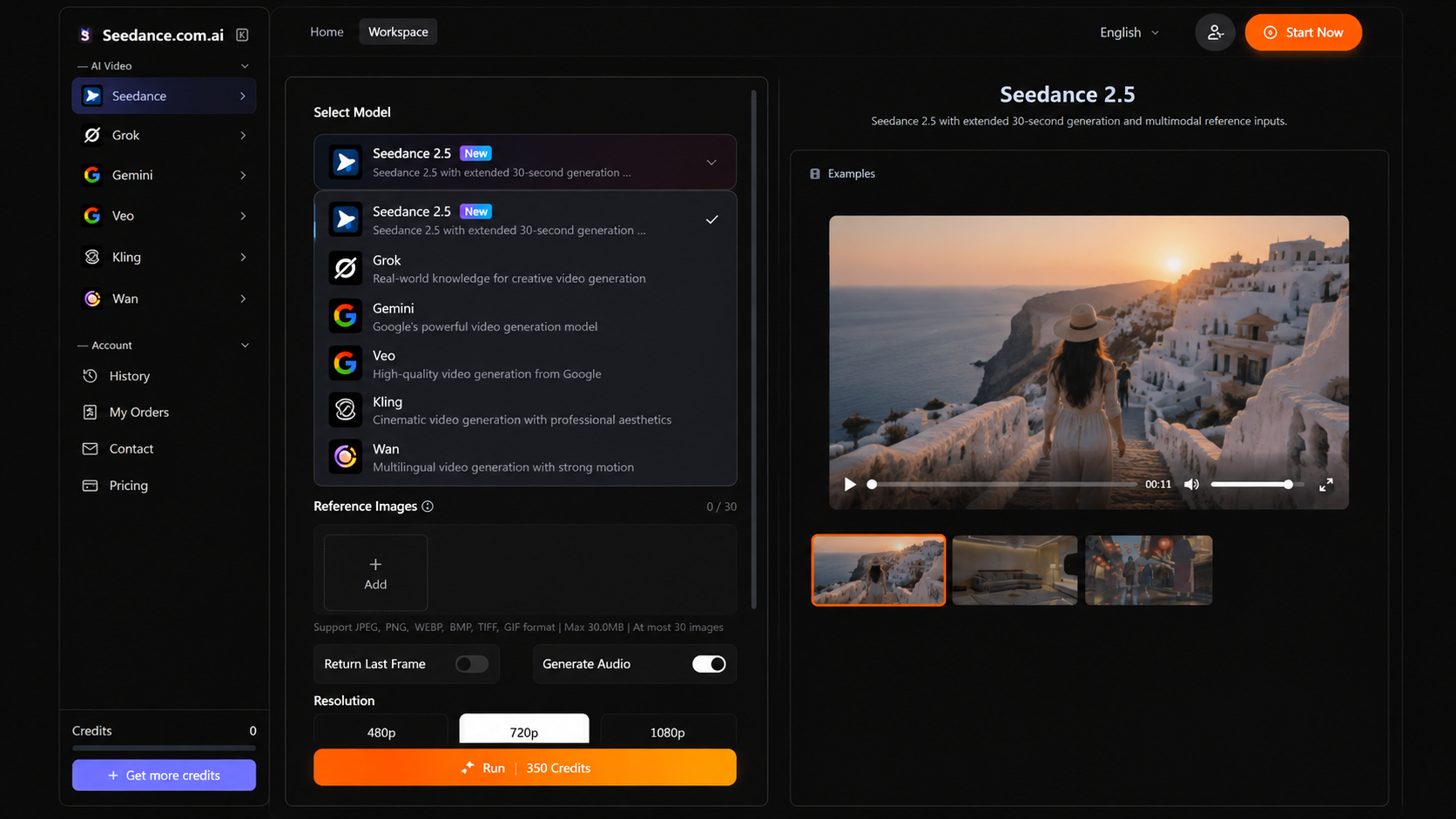
How the Four Models Differ by Camera-Movement Scenario
Camera-Movement Need | Model Most Relevant to Compare | Why |
|---|---|---|
Preserve a reference character while introducing movement | Seedance | Reference handling and subject stability are central to the comparison |
Follow detailed text-based camera instructions | Veo | Prompt adherence and camera direction are the main evaluation points |
Combine active character movement with a tracking camera | Kling | The key issue is coordination between subject movement and camera movement |
Use a simpler push-in, pull-back, or controlled camera change | Wan | Stability during straightforward camera changes becomes the main comparison point |
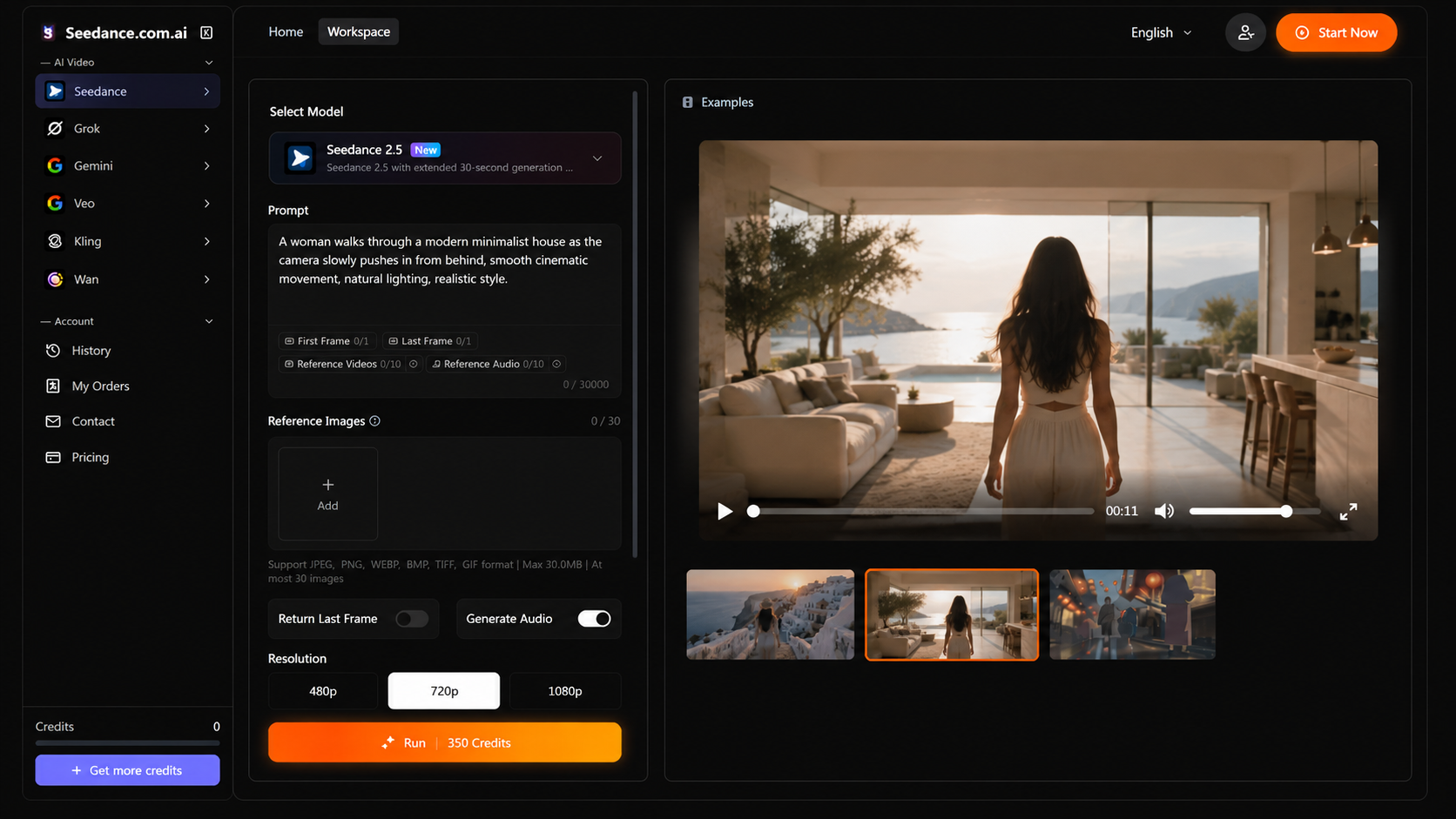
If you already have a video whose motion or camera direction you want to use as reference, see the Seedance Reference Video Tutorial: Motion and Camera Movement.
Orbit shots are more complex because the camera introduces new viewing angles around the subject. They place additional pressure on subject identity, geometry, background relationships, and camera-path continuity.
For that reason, the best AI video model for orbit shots cannot be determined from a general model label alone. The relevant comparison depends on whether the scene prioritizes reference consistency, prompt-driven direction, active subject movement, or stable scene reconstruction.
Seedance vs Veo vs Kling vs Wan: What Actually Changes?
The most useful difference between these four model families is not a simple first-to-fourth ranking.
Seedance centers the comparison more heavily on reference-led motion and subject consistency.
Veo centers it more heavily on prompt-driven camera direction and scene continuity.
Kling becomes more relevant when character movement and camera movement need to remain coordinated.
Wan becomes more relevant for simpler, controlled camera changes where stability is the main concern.
This distinction makes an AI video model comparison more useful than simply asking which model produces the most visually attractive frame.
Camera Movement Comparison Summary
Seedance: Reference handling, subject consistency, and reference-led movement
Veo: Prompt-driven camera direction and cinematic scene continuity
Kling: Character movement combined with camera movement
Wan: Simpler, controlled camera changes such as push-ins and pull-backs
The best AI video model for camera movement is therefore not the same for every type of scene.
A reference-led character shot and a prompt-driven cinematic shot create different problems. A tracking shot with an actively moving character also places different demands on a model than a simple push-in or pull-back.
For that reason, Seedance, Veo, Kling, and Wan are more useful to compare according to the camera-movement requirement of the scene rather than through one overall ranking.
On Seedance.com.ai, these model families are available within the AI Video workflow, allowing the model choice to match the type of movement required by the scene.



